A gas detector speaks three numerical languages, and fluency in all three is the difference between reading an instrument and merely looking at one. Flammable gases are reported as a percentage of the lower explosive limit (%LEL). Toxic gases are reported in parts per million (ppm). Oxygen and bulk gases are reported as a percentage of volume (%Vol). Each scale exists because the hazard it serves lives at that magnitude — and confusing them produces errors of a thousandfold.
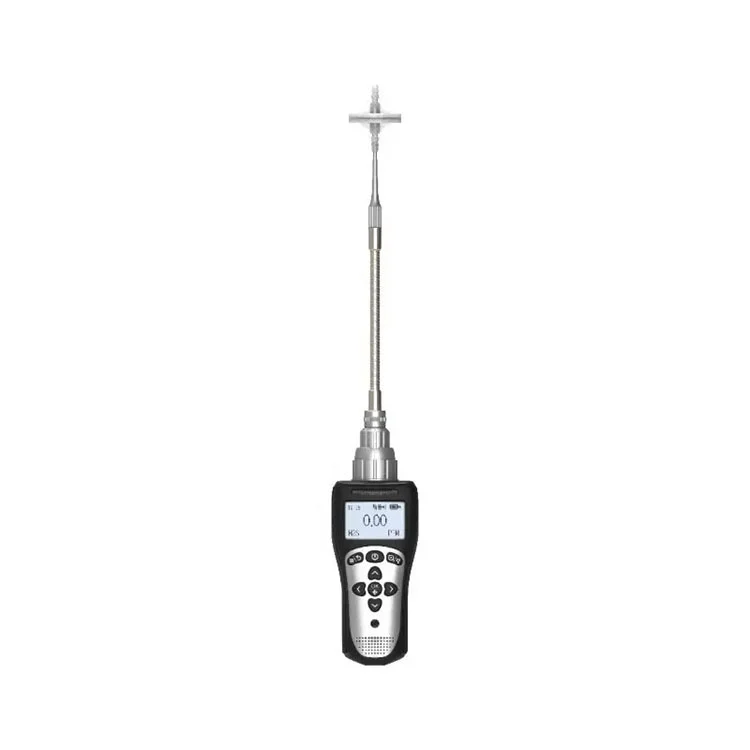
Percent LEL: the distance to a fire
Every flammable gas has a lower explosive limit: the leanest concentration that can ignite. For methane it sits near 5% by volume. A detector reading of 10 %LEL therefore means one tenth of the way to a flammable mixture — 0.5% methane in this case — and alarms are set in this language (commonly 10–25 %LEL) precisely so that the margin to danger is the number on the screen.
The MS400 platform reads combustible gas and methane at 0–100 %LEL with 0.1 %LEL resolution, so the approach to a leak can be watched as a climb of tenths. Remember that %LEL is gas-relative: an instrument calibrated on methane reads other flammables approximately, and professional practice applies correction factors or calibrates on the target gas.
ppm: the language of poisoning
Toxic gases injure at concentrations far below flammability, so their scale is parts per million — 10 ppm of hydrogen sulfide is 0.001% of the air, yet it sits at the edge of occupational exposure limits. Instrument spans follow the toxicology: the portable table in this range reads H2S, SO2 and NO at 0–10 ppm with 0.001 ppm resolution, carbon monoxide at 0–100 ppm, ozone at 0–1 ppm.
Resolution deserves its own sentence: a 0.001 ppm minimum reading lets a hygienist watch trends and background, not just threshold crossings. And ppm connects directly to exposure arithmetic — the TWA and STEL alarms on the same instruments integrate the ppm stream over a shift and over fifteen minutes respectively, which is how a concentration becomes a dose.
Percent volume: oxygen and the bulk gases
Oxygen is a fifth of the air itself, so its scale is percent by volume: 20.9% normal, deficiency alarms below 19.5%, and instrument spans like the 0–30 %Vol (0.01 %Vol resolution) on the portable platform. The same language serves bulk process gases — carbon dioxide measured at 0–20%, 0–50% or 0–100% in the MIC300-F08 analyzer, where ppm thinking would produce absurd seven-digit numbers.
The crossover gases teach the point best. Carbon dioxide is a process gas in percent and an asphyxiant watched in ppm near people; methane is a %LEL safety gas and a percent-level analyte in biogas. The scale is chosen by the question — how close to danger, how much exposure, or how much product — and a competent specification names the scale before it names the instrument.
The supporting numbers: resolution and T90
Two specifications complete scale literacy. Resolution (minimum reading) decides whether a trend is visible or the display sits at zero until it jumps. Response time, stated as T90 — the time to reach 90% of the true value — decides whether a reading can be trusted while moving: the portable table's 10–30 second T90 figures are why a leak hunter sweeps slowly and pauses at fittings.
Read together — scale, span, resolution, T90 — the four numbers on a datasheet stop being marketing and become a prediction of how the instrument will behave in your plant. That prediction is the entire basis on which detectors should be bought.
One gas, three rulers: a worked example
Take methane. The safety world speaks of it in percent LEL: the lower explosive limit is 5% methane in air, so a reading of 20% LEL means 1% methane — a fifth of the way to a flammable mixture, and the point at which most entry procedures demand withdrawal. The toxicology-adjacent world and the leak world speak in ppm: 1% methane is 10,000 ppm, so the same atmosphere reads 10,000 ppm — a number suited to instruments hunting thousand-ppm leaks. The process world speaks in percent volume directly: the biogas plant's 60% methane is 60 %Vol, off the top of any LEL scale and meaningless in ppm without six digits. Same gas, same air, three rulers — chosen by the size of the quantity and the decision it drives.
Hydrogen sulfide inverts the example: its danger lives at the bottom of the scale. Exposure limits sit in single and double digits of ppm; a percent-volume instrument could not see it at all, and a percent-LEL instrument would need the gas near 4% — thousands of times past lethal — to register meaningfully. Scale selection is therefore not a display preference; it is the difference between an instrument that can see the hazard and one that structurally cannot.
Why LEL exists at all
Percent LEL survives because it answers the flammability question in the units of the decision: how close is this atmosphere to burning? It normalises across gases — 50% LEL is half-way to danger for propane, pentane or methane alike, even though the underlying percentages differ — and alarm thresholds set in percent LEL (10% investigate, 20% withdraw, in common practice) translate across a mixed-gas site without per-gas arithmetic. Its weakness is the mirror of its strength: it hides the absolute concentration, so a percent-LEL reading cannot answer toxicological or process questions, and it depends on the sensor's calibration gas — a bead calibrated on methane under-reads heavier vapours unless correction factors are applied.
Conversion discipline in the field
Conversions between scales are simple multiplications wrapped around one anchor per gas: its LEL in percent volume. Percent LEL to percent volume: multiply by LEL/100. Percent volume to ppm: multiply by 10,000. Percent LEL to ppm: multiply by LEL × 100. Methane (LEL 5%): 100% LEL = 5 %Vol = 50,000 ppm. Propane (LEL 2.1%): 100% LEL = 2.1 %Vol = 21,000 ppm. The errors that hurt are not arithmetic but categorical: quoting an LEL percentage as a volume percentage (a five-fold or fifty-fold understatement), or applying one gas's anchor to another's reading. Instruments that display in the scale of the decision remove the conversion — and the error — from the moment of stress.
Dual-scale instruments and their proper use
Wide-range instruments increasingly span scales: ppm for the hunt, percent LEL for the verdict, percent volume for the process. Used well, the operator works in ppm while approaching a suspected leak, watches the instrument change register as concentrations climb, and makes entry decisions in percent LEL against the permit. Used badly, auto-ranging hides the transition and a hurried glance mistakes 40 (%LEL) for 40 (ppm) — a thousand-fold misreading. Training on dual-scale fleets must therefore drill the unit annunciation: the number is meaningless until its scale is named, and crews should say readings aloud with their units, the same discipline aviation applies to altitudes.
Matching the scale to the sensor, once more
Physics enforces the pairings. Catalytic beads live in percent LEL; photoionisation lives in ppm; thermal conductivity and high-range infrared live in percent volume; electrochemistry spans ppm for toxics and percent for oxygen. When a specification asks one channel for an impossible pairing — percent-LEL toxic readings, ppm bulk process gas — the correct response is to re-ask the question the measurement must answer, because that question, not the catalogue, dictates both the scale and the sensor that can honestly serve it.
The same reading, three meanings: a drill
Give a class the single number 25 and three instruments, and watch the room learn the lesson permanently. On the percent-LEL combustible instrument, 25 is a quarter of the way to a flammable atmosphere — a withdraw-now reading under most entry rules. On the ppm toxic instrument measuring carbon monoxide, 25 is an unremarkable working concentration brushing against an eight-hour limit discussion. On the percent-volume process instrument, 25 is a quarter of the stream being the measured gas — a process condition of the first importance. One number, three urgencies, and the only difference is the scale the instrument thinks in. Drills like this belong in every gas-detection induction, because the misreading accidents in the literature are rarely about sensors; they are about a competent person reading a correct number in the wrong scale under time pressure.
Where each scale's instruments live
Scales have habitats. Percent LEL lives on the belts and in the hands of entry teams, on the fixed points guarding plant rooms, anywhere the question is 'how close to burning'. Ppm lives in the hygiene survey, the leak hunt, the personal toxic monitor, the fence-line argument — anywhere the question is 'how much of a poison, exactly'. Percent volume lives in the process: the biogas line, the flue, the inerted vessel, the oxygen plant — anywhere the gas is an ingredient rather than a contaminant. Instruments increasingly visit neighbouring habitats, and the visitor's duty is translation: the visiting instrument must display in the habitat's scale, or its readings will be misfiled by busy brains. Specification writers should state the habitat scale explicitly and treat any conversion the operator must perform as a design flaw to be engineered out.
Precision, resolution and the lies of small numbers
Scales also carry precision habits. Ppm instruments at the bottom of their range fight noise, zero drift and cross-sensitivity, and a display showing single ppm invites a faith the physics cannot support — treat the last digit of a trace reading as weather, not climate. Percent-LEL instruments resolve coarsely by design, because the decisions they serve are coarse. Percent-volume process instruments justify their precision with stable sampling, and lose it the moment the sample path degrades. Reading a number well means knowing which of its digits are information — a judgement that differs by scale, by principle and by the state of the sampling, and that no display can make for its operator.
A note on oxygen, the scale that is also a fraction
Oxygen breaks the pattern pleasantly: its percent is simultaneously a scale reading and a statement about the whole atmosphere — 20.9% is not a concentration among others but the definition of ordinary air, and every other gas's reading is implicitly a share of the remainder. That is why oxygen is measured first in entry testing and why its displacement reading indicts the unknown: a fall to 19% means two percent of something else has arrived, and the something else is the investigation. Oxygen's percentage is the atmosphere's census; the other scales are biographies of individual gases. Crews who grasp the census idea stop treating the oxygen channel as the boring one, and start treating it as the frame the other three hang in.
Scales in the control room: when numbers travel
Readings rarely stay where they are measured: they travel to panels, historians, reports and courtrooms, and each journey is a chance to lose the scale. A percent-LEL trend archived without its unit becomes, two years later, a percent-volume claim in somebody's report; a ppm peak quoted without its gas becomes a mystery. Data discipline therefore treats the unit as part of the value — stored with it, displayed with it, exported with it — and treats the gas's identity the same way. Instruments and systems that enforce the pairing save their owners from the peculiar embarrassment of precise numbers that cannot be interpreted, which is worse than no numbers, because they get interpreted anyway, wrongly, with confidence.
Teaching scales to new starters
The induction that works teaches scales by biography rather than by table: the entrant's four channels and what each one's numbers command; the fitter's flue readings and the knee they hunt; the surveyor's ppm and the plume it sketches; the operator's percent and the stream it describes. Each recruit learns their own scale natively and the neighbouring scales as foreign languages with phrase-book fluency — enough to recognise a number out of its country and refuse to act on it untranslated. That refusal, practised early, is a safety behaviour of the first rank, and it costs one honest hour of teaching per recruit.
The one-page conversion card
Finally, the artefact: a laminated card, per site, carrying the gases that matter there with their anchors — LEL in percent volume, the ppm equivalents of the site's alarm thresholds, the percent-volume meaning of full scale — written for the gases and the instruments that site actually owns. Cards like this live at the dock, in the tester's case, on the control-room wall, and they earn their keep in the hurried minute when a conversion must be right rather than quick. Sites should review the card whenever the fleet or the thresholds change, because a stale card is a confident error with lamination. The whole article reduces to the card's existence: scales are simple, and the discipline of keeping them attached to their numbers is the entire art.
Scales in standards and law
Regimes write their duties in one scale each, and fluency includes knowing which: entry rules in percent LEL and percent oxygen, exposure limits in ppm and milligrams per cubic metre (with the conversion between those two itself temperature- and pressure-dependent, a scale trap of its own), emission limits in milligrams per normal cubic metre or in ppm corrected to a reference oxygen — the correction being another place where scales breed errors, since a flue reading's meaning changes with the oxygen it is normalised to. Professionals keep the regime's scale in view the way sailors keep the chart's datum: the number is meaningless until its reference is named, and naming it is a habit of speech, not a talent.
Milligrams, ppm and the conversion that bites
The ppm-to-milligram conversion deserves its paragraph because it bites quietly: milligrams per cubic metre equals ppm multiplied by molecular weight and divided by the molar volume — about 24.45 litres at room conditions, about 22.4 at freezing — so the same ppm is a different mass concentration in a hot plant room and a cold store. Hygiene data compared across temperatures without the correction carries a built-in error of several percent, small beside some uncertainties and decisive beside a limit. Laboratories handle this by reflex; field programmes should borrow the reflex, recording the temperature basis wherever mass concentrations are reported.
A scale audit for any site
The practical close: walk the site and list every gas number it displays — on instruments, panels, permits, dashboards — with the scale each is secretly in. The audit reliably finds a panel trending percent-LEL points labelled in ppm by an old configuration, a permit whose action level was copied from a ppm regime into an LEL column, a dashboard normalising flue data to the wrong oxygen. Each find is a small loaded error awaiting its hurried reader. Correcting the labels costs an afternoon; the audit is therefore the highest-value half-day in gas safety administration, and it generalises this whole article into one instruction: never let a number travel without its scale, its gas and its reference — the three companions without which it is not a measurement but a rumour.
Scales in the permit office
One more habitat deserves its visit: the permit office, where numbers from several scales meet on one form and are signed by somebody accountable. Permit writers should print the scale beside every action level the form carries — not in the procedure manual, on the form, at the line, where the hurried eye lands. Testers should be required to record readings with their units written out, a small friction that has prevented large errors. And supervisors countersigning a permit should read the numbers as a scale audit in miniature: does this oxygen sit beside this LEL sensibly, does this ppm belong to the gas named? The permit is where scales go to be believed; belief should be made to work for its living.
The apprentice's three mistakes
Teach the three canonical mistakes until they bore the apprentices, because boredom with them is the vaccine. Quoting an LEL percentage as a volume percentage, shrinking a hazard fivefold or fiftyfold in the telling. Comparing a ppm reading against an LEL threshold, or the reverse, because the numbers looked similar. Reporting a percent-volume process figure as if it were a safety clearance, telling a crew that a vessel at forty percent methane is 'well above the limit' when the sentence they needed was about oxygen, displacement and the impossibility of entry. Each mistake is a scale torn from its number; each has its incident in the literature; each is prevented by the one habit this article has prescribed in every dialect — say the unit, name the gas, state the reference, every time, especially when in a hurry.
A scale for the road: vehicle and marine dialects
Two more dialects complete the survey. Vehicle workshops and inspection pits meet petrol vapour in percent LEL and carbon monoxide in ppm within the same hour, on instruments whose users cross between scales without ceremony — a professional fluency worth copying deliberately rather than assuming. Marine practice adds its own accent: tank atmospheres judged in percent LEL for entry, in percent volume for inerting, and in ppm for the toxic cargo residues, sometimes from the same multi-range instrument in the same hour. The marine checker who reads all three natively is the scale system's graduate; training programmes should hold that fluency up as the standard, attainable and unglamorous, that it is.
Numbers with their passports
Let the article close with its single image. A measurement is a traveller: it is born at a sensor, crosses desks and databases and years, and is asked hard questions at borders it never expected. Its passport is the triple this article has stamped at every crossing — the gas, the scale, the reference — without which it is an undocumented number, employable only by rumour. Stamp every number your site produces. The discipline costs a habit; the alternative costs, eventually, exactly the incident the number existed to prevent.
Scales in the age of the merged instrument
Instruments keep merging the scales into single displays that auto-range from ppm through percent LEL to percent volume, and the merger sharpens rather than settles this article's argument: the machine now changes scale mid-incident, silently, at exactly the moment its reader is busiest. Training for merged instruments must therefore drill the transition itself — watch the unit annunciator, call the scale aloud at every reading, distrust any number whose unit you have not seen in the last five seconds. Manufacturers can help with honest interface design — units as large as the digits they govern, scale changes announced — and buyers should grade that design as a safety feature at evaluation, because in the merged era the annunciation is the measurement.
Scales in the hospital corridor
One more habitat, chosen because it concentrates the article's whole teaching in a single corridor. The hospital's plant level holds boilers whose flues speak percent oxygen and ppm carbon monoxide; wards above hold medical air and oxygen enrichment risks spoken in percent; the laboratory holds solvent vapours spoken in ppm; a delivery of liquid nitrogen threatens a store room in the only language that matters there, percent oxygen falling. Four dialects in one building, maintained by one estates team, audited by people who will read the numbers in whichever scale the form happens to print. The hospital that labels its forms with units, trains its porters to say scales aloud, and files its readings with their passports intact is practising exactly the discipline of the refinery and the mine — because the physics, and the hurried reader, are the same everywhere.
The tachometer analogy, for the training room
A car's instruments teach the same lesson without a whiff of gas: the speedometer's number is meaningless until its unit is known — sixty is a motorway in one dialect and a city street in another — and the fuel gauge's fraction is a different species of statement from the odometer's accumulation, though all three are 'just numbers about the car'. Recruits who drive already own the intuition; the training room's job is to transfer it to gases before habit forms. Ask the class which dashboard number they would act on without its unit, and enjoy the silence: nobody would, and that silence, remembered at a hatch with a detector in hand, is the whole curriculum.
Colophon: the reader's ruler
Take one ruler away from this article and let it be a question, asked of every gas number you ever meet: of what gas, in what scale, against what reference, measured by what principle, at what moment? Five clauses, ten seconds, and the number becomes a measurement again — situated, interpretable, safe to act on. Numbers that cannot answer the five clauses are not yet information, whatever their decimal places claim. The question is the instrument the reader carries everywhere, including into rooms where no other instrument has yet been bought.