CO detection divides into two worlds that share a sensor: personal and area safety monitoring at ppm levels, and flue gas measurement, where CO is the tuning signal for combustion quality. This guide covers both.
Safety monitoring
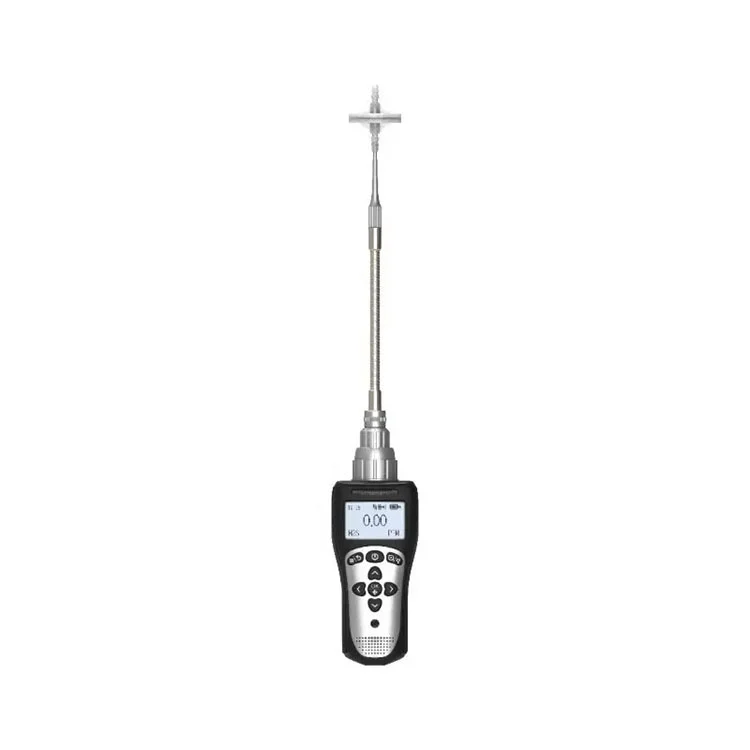
The MS400 platform reads CO at 0–100 ppm with 0.1 ppm resolution and T90 within 25 seconds — the span of exposure control, where time-weighted averages matter as much as peaks. Garages, warehouses with combustion forklifts, boiler houses and steel and power environments are the standing territories; fixed points watch the unmanned hours.
Electrochemical cells dominate CO sensing: small, specific enough with proper filtering, and stable across the temperature swings of plant work.
CO in the flue
In the flue, CO is information rather than only hazard: rising CO says the burner is running fuel-rich and wasting money as well as making poison. The MS600-FG2 flue gas analyzer and the company's published boiler solution — flue CO and O2 monitoring driving combustion optimisation — serve that workflow, detailed in the boiler flue gas monitoring guide.
The MIC300-F08 also carries CO in its analyzer set for process and emissions streams, and the MS800A-10 watches ambient CO at monitoring stations. One gas, three instruments, three different questions — the guide's point is to match the question first.
CO in the body: why minutes and ppm trade against each other
Carbon monoxide harms by accumulation: haemoglobin binds it preferentially, carboxyhaemoglobin rises with concentration multiplied by time, and symptoms climb from headache through confusion to collapse along that curve. Exposure limits therefore come as pairs — an eight-hour average and a short-term ceiling — and good instruments serve both, logging the dose picture as well as sounding the peak alarm. A detector that only alarms at a high instantaneous threshold undersells the hazard; a workforce briefed on the dose idea understands why a modest reading sustained all shift is a finding, not a nuisance.
Finding CO sources before they find people
The classic CO incidents share a shape: combustion plant in a fault state — a cracked heat exchanger, a blocked flue, a mis-tuned burner — plus a pathway into occupied air. Detection strategy follows the shape: fixed points in boiler houses and plant rooms where the faults happen, personal instruments for the maintenance crews who open the equipment up, and flue-gas analysis as the diagnostic that finds the fault itself rather than its leakage. Each layer covers the others' blind spots, and the layers are cheap compared with the incident they partition.
Vehicle and loading environments add a mobile version of the same shape: engines in enclosed or semi-enclosed spaces — warehouses with forklift traffic, parking structures, loading docks — where ventilation designed for comfort meets combustion designed for work. CO points at breathing height, tied to ventilation boosts, are the standard answer and a model of detection-actuation pairing.
Electrochemical CO cells and their interferences
CO cells are among the most mature electrochemical sensors, and their known weakness is hydrogen cross-sensitivity — a cell without hydrogen compensation can read a substantial fraction of a hydrogen atmosphere as CO. In battery rooms, hydrogen-rich process areas and reformer service, that interference is not a footnote but the specification: compensated cells, or a measurement scheme that accounts for the hydrogen present. Knowing your atmosphere's full composition — the recurring theme of honest detection — decides whether the standard cell suffices.
CO specification checklist
Carbon monoxide specifications divide by the question being asked. Protection questions want ppm electrochemical measurement with dose logging and alarms staged against the exposure limits — personal instruments for mobile workers, fixed points for occupied plant rooms, both alarmed to act (withdrawal for people, ventilation and isolation for rooms). Diagnosis questions want the flue-gas conversation: oxygen, CO and usually NO together at the sampling port, in an instrument built for the stream's heat and moisture. Inventory questions — hospital and laboratory safety, warehouse fleets, parking structures — want fixed points at breathing height tied to the ventilation they command. Naming the question in the inquiry prevents the classic CO muddle, in which a boiler house buys protection instruments to do a diagnosis's job and wonders why the burner still wastes fuel.
One line belongs on every CO specification: hydrogen. Where hydrogen shares the atmosphere — battery rooms, reformer and syngas areas — the CO channel must be hydrogen-compensated or the scheme must account for the interference in writing. It is a small line that separates specifications written from the atmosphere outward from specifications written from a catalogue inward.
Carbon monoxide terms
Carboxyhaemoglobin — the blood's CO loading, the quantity exposure actually administers, rising with concentration multiplied by time. Haemoglobin affinity — CO's two-hundred-fold binding advantage over oxygen, the molecular root of its danger. Backdrafting — the reversal of a flue's flow that spills combustion products into occupied rooms. Heat exchanger breach — the crack that lets a furnace's flue gas join its air stream, the classic domestic and commercial CO source. Flue gas analysis — the diagnostic measurement at the appliance itself, upstream of every room incident. Hydrogen cross-sensitivity — the CO cell's partial answer to hydrogen, compensated or confessed in honest specifications.
Dose logging — the instrument's accumulation of exposure against time, serving the average limit as alarms serve the ceiling. Ceiling limit — the concentration never to be crossed, set in the low hundreds of ppm for CO in common regimes. Incomplete combustion — the oxygen-starved burning that manufactures CO, tuned away at the flue by the knee method. Ambient CO — the background of trafficked and industrial air, against which a room's increment is judged. CO poisoning's latency — the gap between exposure and symptoms that makes the gas a retrospective diagnosis and demands instrumental foresight. Ventilation interlock — the fan or damper action a fixed CO point commands, the room layer's actuation.
CO and the domestic mirror
The industrial CO discipline has a domestic mirror that sharpens it: the same gas, from the same faults, in homes and small premises, where the instruments are alarms rather than analysers and the occupants are children and the elderly rather than trained crews. Industrial practitioners who serve both worlds — the heating trade above all — carry the lessons across: place the sensor where the people are, distrust the appliance that 'has always smoked a little', treat every unexplained headache cluster as a measurement problem. The mirror matters to this guide because it proves the principle at the smallest scale: CO is unglamorous, cumulative and entirely manageable by measurement, and the sites that manage it best are simply the ones that never stopped measuring.
CO in the age of the heat pump and the sealed building
Buildings grow tighter and heat grows stranger: airtight envelopes that hold onto combustion faults, biomass boilers in utility rooms, hydrogen blends approaching the gas grid with their own combustion signatures, standby generators exercised monthly in basement plant rooms. Each trend moves CO's geography a little, and detection schemes designed for the old building stock should be re-argued rather than assumed. The re-argument is cheap — a walk, a gas map, a review of which points still stand where the faults now happen — and it is the same management-of-change discipline this catalogue prescribes for chemical plants, translated to the built environment's quieter scale.
CO's quiet partnership with ventilation
Half of CO engineering is air movement: the boiler house's louvres, the warehouse's dock doors, the car park's jet fans answering their sensors. Detection and ventilation fail together in one classic way — the sensor that alarms faithfully to a fan that was isolated for maintenance — and succeed together when the interlock is proof-tested as one system, alarm to airflow, on a schedule somebody owns. When this guide's readers specify a CO point, the ventilation it commands deserves the next line of the same purchase order's attention, because a detector that can only watch is a witness hired to describe an accident it was cheaper to prevent.
| Instrument | CO measurement | Role |
|---|---|---|
| MS400 platform | 0–100 ppm, 0.1 ppm resolution | Personal and area safety |
| MS600-FG2 | Flue gas CO with O2 | Combustion tuning |
| MIC300-F08 / MS800A-10 | CO in analyzer / ambient panels | Process and fence-line |
Send a target gas list, get a configuration
Quotations are built from the published parameters on this site. Tell us the gases, the ranges and the quantity — or the point schedule for a fixed project — and the reply comes back within 24 hours.
Request a quotation