This guide organises the layers and the instruments on this site that serve each: PID channels in portables for screening, the PTM100 dual-detector analyzer for survey quantification, the PTM200 for the NMHC regulatory number, and ambient panels for the fence line.
Screening: PID in the hand
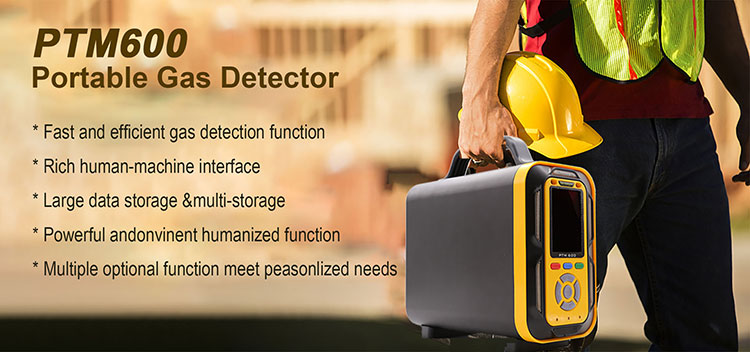
The MS400 platform reads TVOC and PID volatiles at 0–10 ppm with 0.001 ppm resolution — a screening span that turns a walk through a tank farm or a remediation site into a map of where the vapour is. The PTM600 extends the same approach across up to 18 channels for analysis-grade portable work.
Screening readings are relative: PID response varies by compound, so the screener's job is geography (where, how strong, which direction grows) rather than a final concentration. The FID-versus-PID comparison explains the physics behind that division.
Quantification and the regulatory number
Where a number must stand — LDAR component readings, NMHC emission values — flame instruments take over: the PTM100 pairs FID with PID so one survey can screen and quantify, and the PTM200's catalytic-furnace FID reads methane, total hydrocarbons and NMHC directly.
Programmes that keep the layers straight — screen widely, quantify narrowly, monitor the boundary — spend their instrument budget where the decisions are. That is the architecture this site's VOC category is built to equip.
Total VOC and speciated VOC: two different promises
A total-VOC reading is a sum with an asterisk: the instrument counts what its principle can see, weighted by its response to each compound, expressed against its calibration gas. It promises a screening answer — is the organic load here rising, falling, present, absent — in real time and at field cost. Speciation promises identity and individual quantities, delivered by laboratory analysis or process gas chromatography at laboratory pace and price. Most working programmes need the promise kept in sequence: total-VOC instruments to find and follow, speciated analysis to name and judge. Confusing the promises — regulating a compound by a total reading, or screening a plant with a chromatograph — wastes money or, worse, certainty.
Lamp choice and humidity: PID practice
The PID lamp sets the visible family: 10.6 eV ionises most solvents and aromatics while sparing methane and the lightest alkanes; higher-energy lamps widen the family at the cost of lamp life and stability. Humidity is the field enemy — water vapour quenches response and condenses on lamps — answered by lamp cleaning routines, humidity compensation and honest expectations in steam-laden service. Correction factors per compound, printed by every serious manufacturer, turn the isobutylene-equivalent reading toward truth for known targets; surveyors carry the factors for their site's top compounds the way electricians carry a meter's ranges.
FID versus PID for VOC duty
The flame instrument counts carbon almost impartially, methane included, at the price of hydrogen logistics and a naked flame; the photoionisation instrument counts the ionisable, methane excluded, at the price of lamp physics. Between them they cover the VOC world: FID for emission inventories, LDAR and combustion-adjacent work; PID for screening, confined-space vapour checks, remediation and hygiene surveys. Many professional kits carry both and let the question choose — which is the pattern this catalogue keeps returning to: principles are answers, and the discipline is matching them to questions.
VOC specification checklist
A VOC specification is honest when it names its compounds — the top handful by volume and by consequence — because everything else is derived from them: the principle that can see them (PID lamp energy against their ionisation thresholds, FID's near-universal carbon count), the correction factors that translate readings toward truth, the range that brackets the decision thresholds, and the calibration gas the programme will actually use. Add the environment's vote — humidity for PID work, oxygen and flame safety for FID — and the programme's thresholds with their repair or evacuation consequences, and the specification is complete. The failure shape to avoid is the unnamed-compound specification ('VOC detector, 0–1,000 ppm'), which procures an instrument optimised for a gas the site may not contain, reading a scale the site's thresholds do not use. Five lines of compound honesty at inquiry time are worth a instrument's price in avoided error.
VOC terms
Volatile organic compound — the family defined by evaporation: solvents, fuels, monomers and refrigerants that leave surfaces and processes as vapour. Total VOC — the single summed number a screening instrument reports, denominated in its calibration gas. Speciation — the identification and individual quantification of compounds, laboratory work that screening directs. Isobutylene equivalents — the PID's native currency, converted per compound by correction factors. Lamp energy — the 10.6 electron-volt standard that decides which compounds a PID can ionise. Humidity quenching — water vapour's suppression of PID response, the field condition behind many a low reading.
FID carbon response — the flame instrument's near-impartial counting of organic carbon, methane enthroned among the counted. Correction factor table — the manufacturer's per-compound multipliers, carried by competent surveyors for their site's inventory. Photoionisation potential — a compound's ionisation threshold, the property that sorts the visible from the invisible. Screening survey — the breadth-first pass that maps a plant's vapour geography before quantification is aimed. Soil vapour — the subsurface VOC burden of contaminated land, surveyed through probes with the same two principles. Headspace — the vapour above a liquid in a tank or sample jar, whose reading estimates the liquid's volatility story.
VOC programmes and the community
VOC measurement increasingly happens in public: fence-line surveys, remediation sites in lived-in streets, odour investigations where the instrument's reading must be explained to the householders smelling the same air. That setting imposes a discipline of its own — readings reported with their principle, their calibration basis and their limits attached, because a total-VOC number quoted naked will be heard as a verdict on a named chemical it never measured. Practitioners who master the explanation ('this instrument counts the family; the laboratory will name the members; here is what today's pattern does and does not say') keep both the data and the trust. The technical and the civic virtues, in VOC work, are the same virtue: precision about what a number is.
VOCs and the remediation decade
Contaminated-land remediation is VOC practice's growth industry: excavations breathing soil vapour, treatment systems stripping solvents from groundwater, vapour-intrusion surveys beneath buildings that stand over old plumes. The work runs on this guide's two principles in their field forms — PID as the excavator driver's companion and the surveyor's census-taker, FID where the inventory must be defended — plus the laboratory's speciation as the verdict both serve. Timescales stretch to decades, which makes the data stewardship chapter the important one: readings tied to locations and depths in archives that outlive the contractors who took them, because the plume will be re-argued by people not yet hired.
The VOC walk as a social instrument
A VOC survey changes a plant's behaviour merely by being seen: the surveyor's unhurried pace at the flanges teaches the area's operators what a leak sounds like in numbers, and the tags that bloom after a survey announce that the invisible has become legible. Wise programmes exploit the theatre deliberately — operators invited to walk a section with the surveyor, findings briefed at the shift meeting with the corrected numbers attached — because the survey's half-life as data is months, while its half-life as culture is years. The instrument counts molecules; the walk counts as management, and both belong in the programme's account of itself.
| Instrument | VOC measurement | Role |
|---|---|---|
| MS400 platform | TVOC / PID volatiles 0–10 ppm | Screening surveys |
| PTM100 | FID + PID, 200+ compound library | Survey quantification |
| PTM200 | FID with catalytic furnace | NMHC regulatory readings |
Send a target gas list, get a configuration
Quotations are built from the published parameters on this site. Tell us the gases, the ranges and the quantity — or the point schedule for a fixed project — and the reply comes back within 24 hours.
Request a quotation