Detection therefore cannot be optional or occasional in H2S territory: it is personal, continuous and alarmed. This guide sets out the measurement ranges, sensor behaviour and working pattern that H2S demands.
Ranges and response
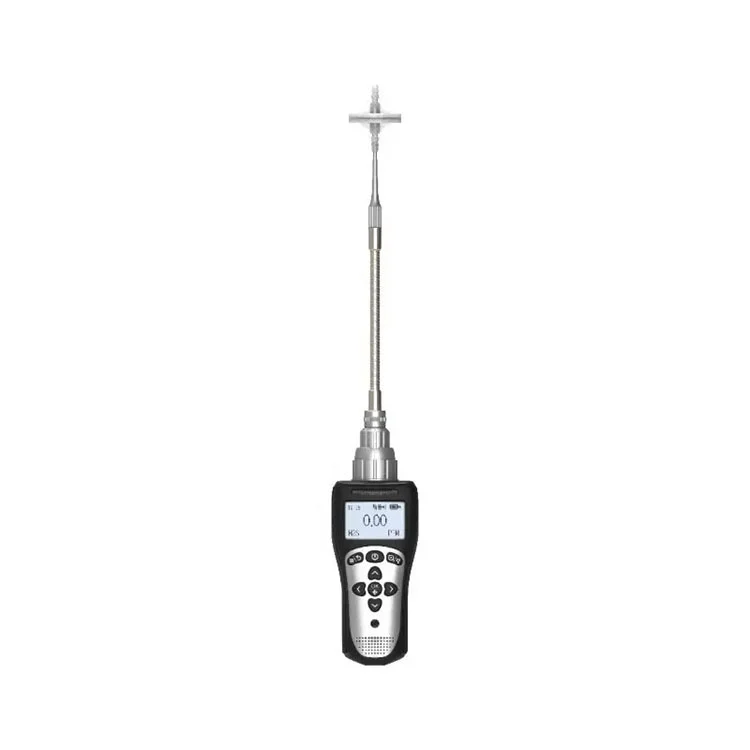
The MS400 platform table reads H2S at 0–10 ppm with 0.001 ppm resolution and T90 within 30 seconds — a safety-instrument span centred on exposure limits, which for H2S sit in the low ppm. The MIC300-F08 analyzer carries H2S in its six-gas set for process and biogas streams, and the MS800A-10 ambient system watches H2S at fence lines where community exposure is the question.
Electrochemical cells are the standard H2S sensor: specific, low-power and fast enough for personal alarms. Their cross-sensitivities — sulfur dioxide and other acid gases — are known and managed by configuration, not ignored.
Working pattern
Personal monitors worn in the breathing zone, pumped pre-entry checks of any low space before a body enters it, and fixed points at known release sources form the three-layer pattern. Wastewater treatment and oil and gas are the standing applications; both have dedicated pages on this site.
The discipline that makes the hardware work is embarrassingly simple: bump test before use, believe the alarm, and never let familiarity with the smell substitute for the instrument. H2S punishes exactly the experienced worker who trusts his nose.
Exposure limits and the shape of the risk
Hydrogen sulfide's occupational limits sit in the low single digits of ppm for eight-hour exposure in many regimes, with short-term limits a few times higher and immediately-dangerous concentrations at 100 ppm. The gap between the limit and the lethal zone is unusually narrow, and the gas's behaviour makes it narrower: exposure itself dulls the perception of risk by killing the sense of smell, so a worker's subjective all-clear degrades exactly as the objective danger climbs. Instrumentation replaces the failed sense entirely — that is the whole argument, and it should be made plainly in every training session this gas is part of.
Peaks matter as much as averages. H2S releases come as slugs — a disturbed sludge blanket, a broken seal, a swept pocket — and a detector's job in slug country is to catch the peak and shout, which is why alarm response and logging of peaks, not just time-weighted averages, belong in the specification for sour-service instruments.
Sensor care in sour service
Electrochemical H2S cells work hard in the environments that need them: humidity swings, temperature extremes and the gas itself consume them. Cells in continuously sour atmospheres age faster than the same cells in clean duty, and cross-sensitivities — sulfur dioxide most notably — can add phantom readings in mixed streams. The maintenance answer is rhythm: bump tests frequent enough to catch a dying cell, calibrations on the manufacturer's sour-service interval rather than the generic one, and spares on the shelf because a sour site cannot wait for a purchase order. Where concentrations run continuously high, sampling systems that dilute or condition the stream protect both sensor and sanity.
Fixed H2S schemes in practice
Fixed points cluster at the release inventory: wellheads and manifolds, separator and sludge areas, sample points, analyser houses, and the low ground where the gas pools. Annunciation must escape the area — a beacon inside a lethal atmosphere warns nobody who can act — so signals repeat at the muster routes and the control point. Rescue doctrine completes the scheme: nobody enters an H2S alarm area to investigate without breathing apparatus, whatever the fixed points say, because the space between a sensor's location and a body's location is exactly where this gas does its work.
H2S specification checklist
Specify hydrogen sulfide work by its exposure profile first: continuous background or clean air with excursions; ppm range of the honest hazard (personal protection lives under 100 ppm; process streams can run percent-level and belong to sampling systems); the companion gases that share the atmosphere and the cells (sulfur dioxide, carbon monoxide, hydrocarbons); the environment's temperature and humidity swing, which electrochemical cells feel directly; and the response the alarm must trigger — personal withdrawal, area evacuation, process trip, rescue muster. Instruments divide cleanly once the profile is written: personal and portable electrochemical units for people, fixed points for areas, conditioned sampling for streams. The checklist's discipline is refusing to let one class impersonate another: a personal monitor is not an area safeguard, and an area point is not a stream analyser, however similar their displays.
Add the human system to the same page: who is trained, to what level, with what rescue equipment, under whose permit. H2S is the gas where the instrument specification and the emergency plan are a single document, and auditors in sour industries read them as such.
Hydrogen sulfide terms
Olfactory fatigue — the gas's paralysis of the sense of smell at dangerous concentrations, the reason noses are banned as instruments in sour service. Knockdown — the sudden collapse that high concentrations inflict, sometimes on the first breath. Sour gas — hydrocarbon gas carrying hydrogen sulfide, whose handling regimes the term names. Sweetening — the removal of H2S from gas streams, the process whose own hazards mirror the product's. Scavenger — a chemical dosed to bind H2S in a stream, with its own monitoring tail. IDLH — the concentration immediately dangerous to life or health, set at 100 ppm for this gas.
Time-weighted average — the eight-hour exposure budget, in low single digits of ppm for H2S in many regimes. Peak logging — the instrument's retention of excursion maxima, the record that slug exposures leave. Cross-sensitivity — the H2S cell's partial answers to sulfur dioxide and other sulfur kin, tabulated and taught. Wet well — the sewer structure whose atmosphere is this gas's home ground. Sludge blanket — the digesting layer in tanks and clarifiers whose disturbance releases stored gas in slugs. Breathing apparatus — the self-contained air supply that is the only acceptable key to an H2S alarm area.
H2S in the contract economy
Sour-service work is heavily contracted — tank cleaning, well work, sludge handling — and the gas does not respect payroll boundaries. The client's duty, increasingly enforced, is to a single standard for everyone inside the fence: the same instruments, the same bump discipline, the same rescue doctrine, audited the same way. Contract documents should carry the detection schedule as an exhibit — instrument classes per task, testing frequencies, training evidence, the client's right to dock-check a contractor's fleet — because the exhibit is what turns a standard from a speech into a fact. Contractors who arrive with their programme documented find the exhibit easy; the market is learning to price that ease.
H2S and the nose's last argument
One argument survives every training programme and must be answered head-on: the veteran who trusts a lifetime's nose over a beeping box. The answer is not ridicule but physiology and record — the nose's threshold sits near the exposure limit's neighbourhood for the first breaths and then fails upward, reporting improvement as concentration climbs into the lethal band; the incident literature's sour-service chapters are substantially biographies of that failure. Programmes convert veterans by involving them: let the sceptic carry the logging instrument through the sludge hall and read their own trace at the debrief, peaks and all. Data persuades where doctrine argues, and a converted veteran is worth a training department.
| Instrument | H2S measurement | Role |
|---|---|---|
| MS400 platform | 0–10 ppm, 0.001 ppm resolution | Personal and entry checks |
| MIC300-F08 | H2S in NDIR six-gas set | Process and biogas streams |
| MS800A-10 | H2S in ambient gas panel | Fence-line monitoring |
Send a target gas list, get a configuration
Quotations are built from the published parameters on this site. Tell us the gases, the ranges and the quantity — or the point schedule for a fixed project — and the reply comes back within 24 hours.
Request a quotation