The platform fact that organises the family: the portable and fixed ranges here draw on a library of more than 500 gas types, because toxic targets are process-specific — the chlorine plant, the fumigation store, the semiconductor fab and the wastewater works each face a different shortlist.
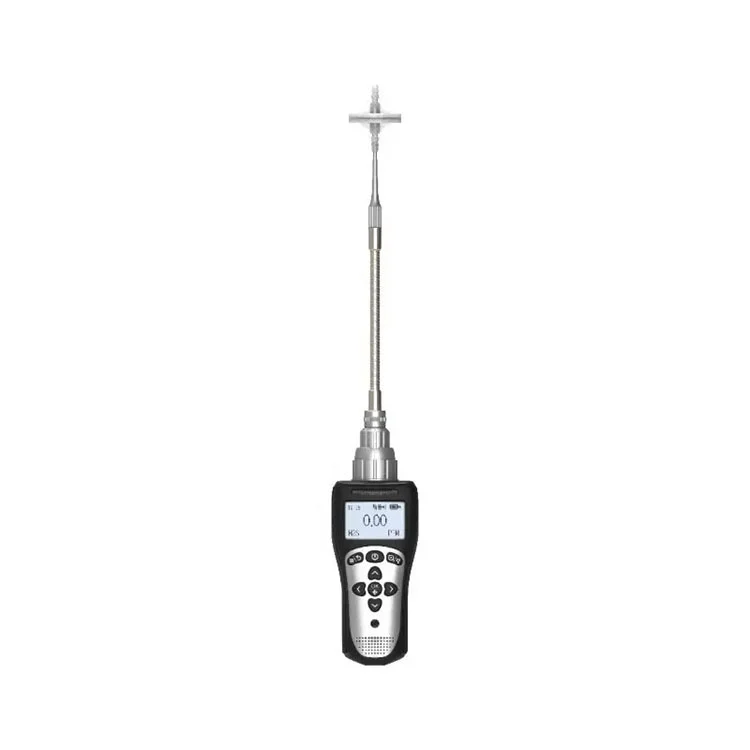
The named gases and the long tail
Hydrogen sulfide, carbon monoxide, sulfur dioxide, nitric oxide, ammonia and ozone carry their own guides and their own published spans in the MS400 platform table — H2S, SO2 and NO at 0–10 ppm, CO at 0–100 ppm, O3 at 0–1 ppm, each resolved to 0.001 ppm (0.1 ppm for CO). Those are the exposure-control spans the electrochemical sensor family serves.
Beyond the named set sit chlorine and Cl2 chemistry, ethylene oxide in sterilisation, formaldehyde in resin and laboratory work, hydrogen cyanide, phosphine in fumigation and hydrogen in battery and process areas. On this site those gases rest on this guide and the single-gas category as platform coverage — configured per order against the 500-gas platform — rather than pretending to model pages the underlying data does not support.
Exposure arithmetic
Toxic alarms think in two clocks: the instant (ceiling and short-term limits) and the shift (eight-hour time-weighted averages). Instruments here carry low, high, STEL and TWA alarm modes because a gas can be legal at minute one and an overexposure by hour six without ever peaking.
Personal monitors in the breathing zone, pumped checks before entry, fixed points at release sources and datalogs that prove the arithmetic — that four-part pattern is the toxic-gas programme, and it recurs through every gas-specific guide on this site.
The long tail of toxic gases
Beyond the headline toxics lies the long tail this platform family exists for: chlorine and chlorine dioxide at water plants, phosphine in fumigation and semiconductor doping, arsine in the same fabs, ethylene oxide in sterilisation, hydrogen cyanide in electroplating and fires, fluorine compounds in etching, formaldehyde in resin plants, and hundreds more each with its small constituency. Long-tail gases share an economics: too specific for dedicated instrument industries, too dangerous to improvise. A sensor platform that spans them — electrochemical cells in the main, optical and semiconductor channels at the edges — turns an exotic requirement into a configuration line, which is why breadth itself is a safety feature.
Exposure science in one page
Toxic limits wear three faces: the eight-hour time-weighted average that governs routine exposure, the short-term limit that caps fifteen-minute excursions, and the ceiling that may never be crossed. Instruments serve the three faces differently — logging and dose arithmetic for the first, fast response and staged alarms for the second and third. A specification that states which face drives the purchase gets the right instrument behaviour; one that asks simply for 'a chlorine detector' will be sold whatever is on the shelf. Ceiling gases — the fast killers — deserve the additional honesty of asking what the alarm can still achieve at their speed, and what must therefore be engineered upstream: containment, ventilation, procedure.
Cross-sensitivity: the toxic fleet's family secret
Electrochemical cells are promiscuous: they respond, partially, to gases beyond their target, and in mixed atmospheres the readings entangle. The professional habits are threefold — know the cross-sensitivity table for every cell in the fleet; interpret surprising readings against the atmosphere's whole composition before acting on a single channel; and where interference is structural (a permanent companion gas), choose a principle or a compensation that separates the pair. None of this diminishes the cells; it is simply the price of their sensitivity, paid in knowledge rather than money.
Toxic-gas specification checklist
For any toxic gas, the checklist is a portrait of the exposure: the limit structure (average, short-term, ceiling) that the alarms and logging must serve; the concentration geography — where the gas is made, where it pools or rises, where people stand in relation to both; the release tempo, chronic weep or acute slug, because it sets response-time and placement priorities; the companions that share the air and the sensors; and the consequence chain each alarm stage must trigger, from personal withdrawal to area evacuation to process isolation. Long-tail gases add their procurement questions — cell availability and shelf stock, calibration gas sourcing, the supplier's history with the specific compound — because an exotic sensor is a supply chain before it is a specification. Written this way, a toxic-gas inquiry is a small risk assessment, and it will be answered by suppliers who recognise one.
Toxic gas terms
Occupational exposure limit — the umbrella term for the concentrations regimes permit, in average, short-term and ceiling forms. TWA — the eight-hour time-weighted average, exposure's savings account. STEL — the fifteen-minute short-term limit, exposure's overdraft rule. Ceiling — the never-exceed line for the fastest actors. IDLH — the immediately-dangerous concentration that reframes every decision beneath it. Action level — the fraction of a limit at which a programme's duties begin, set by the site before the limit is near. Cross-sensitivity — a cell's partial answer to a companion gas, the toxic fleet's standing complication.
Long-tail gas — the specific compound with a small constituency and a real body count, which platform breadth exists to serve. Cell — the electrochemical capsule whose chemistry is matched to one gas family. Sampling system — the conditioned extraction that carries percent-level and hostile streams to sensors that could not survive them raw. Area monitor — the fixed sentinel that guards a place rather than a person. Escape set — the short-duration breathing apparatus staged where a ceiling gas could foreclose retreat. Detector tube — the colorimetric glass tube, the platform era's predecessor, still earning its keep for one-off specific measurements.
The toxic fleet's annual review
Toxic fleets deserve an annual review of their own, distinct from the calibration calendar: the exposure data read for the year — which gases actually appeared, at what levels, in whose breathing zones; the cell population's age and behaviour; the cross-sensitivity incidents and what they taught; the new processes arriving with new compounds for next year's inventory. The review's output is the fleet's evolution — channels added where the data argues, retired where the hazard has left, alarm philosophies adjusted where the peaks taught something. A toxic fleet that never changes is either perfectly specified by luck or quietly diverging from the plant it guards, and the review exists to find out which, while the finding is still cheap.
The toxic inventory as a living document
Every site's toxic inventory should carry a review date and an owner, because processes import new compounds with the casualness of a purchasing department — a new cleaning agent, a substitute solvent, a customer's specification — and each import is a detection question nobody asked. The annual review's method is pedestrian: walk the chemical store and the process sheets against the fleet's channel list, and let every unmatched compound start an argument. Most arguments end in reassurance; the one that does not is the review's salary. Toxic-gas breadth, this guide has argued throughout, is a safety property — and the inventory is where breadth is administered.
Toxic detection's quiet success metric
Judge a toxic fleet not by its alarms but by its near-miss literature: the weeping flange caught at parts per million by a point doing routine duty, the cell whose drift the calibration trend retired a month before its silence would have mattered, the new compound the annual review admitted before the process did. A fleet producing such literature is working; a fleet producing nothing at all is either guarding a genuinely clean plant or asleep, and the calibration and review records are how the site knows which. Success in toxic detection is a bibliography of small events, diligently filed — the least dramatic literature in industry, and the most valuable per page.
| Gas | Span | Resolution |
|---|---|---|
| Hydrogen sulfide (H2S) | 0–10 ppm | 0.001 ppm |
| Carbon monoxide (CO) | 0–100 ppm | 0.1 ppm |
| Sulfur dioxide (SO2) | 0–10 ppm | 0.001 ppm |
| Nitric oxide (NO) | 0–10 ppm | 0.001 ppm |
| Ozone (O3) | 0–1 ppm | 0.001 ppm |
| Chlorine, EtO, formaldehyde, HCN, PH3, H2 | Configured per order | Platform coverage (500+ gas library) |
Send a target gas list, get a configuration
Quotations are built from the published parameters on this site. Tell us the gases, the ranges and the quantity — or the point schedule for a fixed project — and the reply comes back within 24 hours.
Request a quotation