A bump test asks one question — does the sensor still respond, and do the alarms fire? Calibration asks the harder one — does the reading still mean what it says across the span?
The two routines
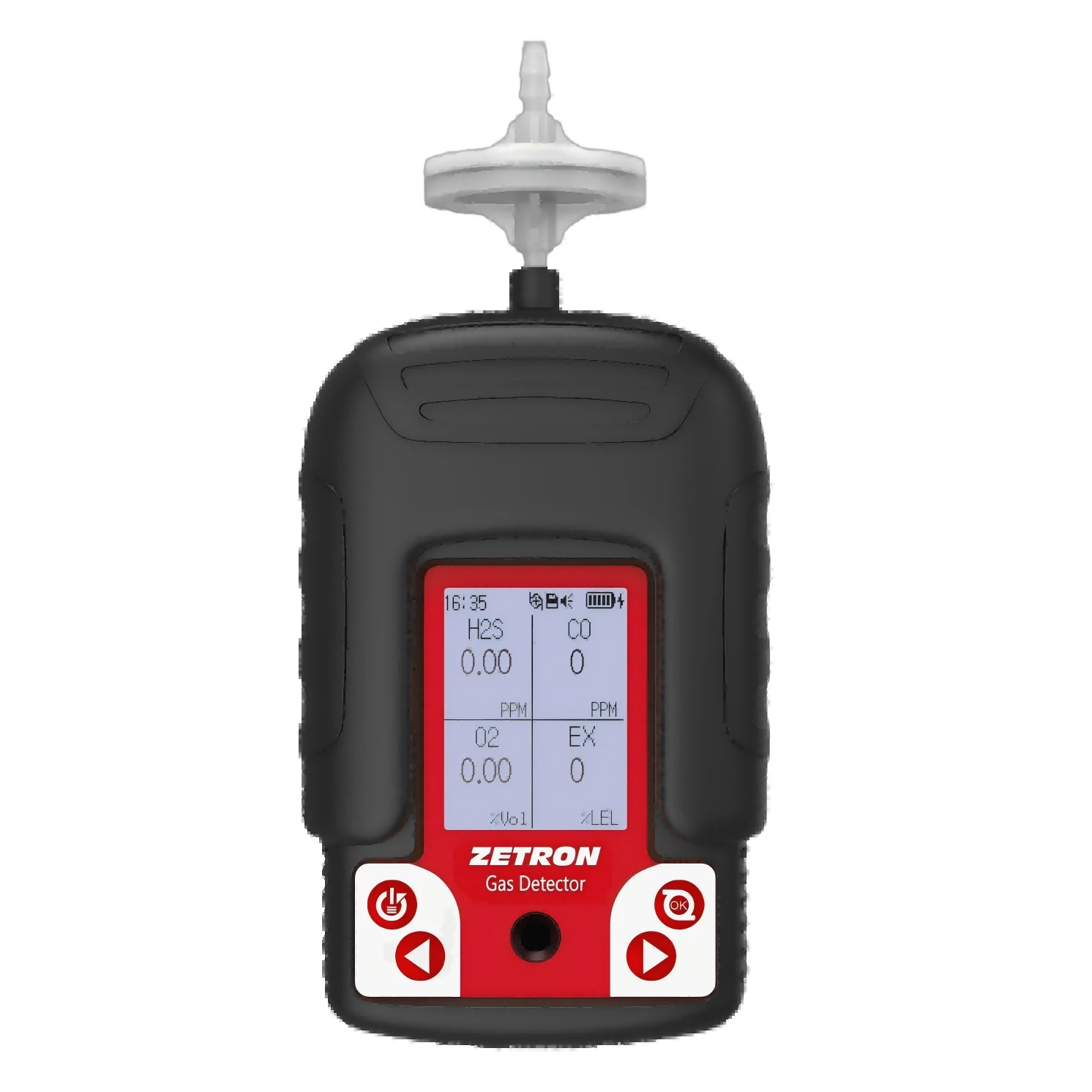
Bump testing is the daily or per-use check: a short exposure to a known gas, confirming response and alarms within seconds. It catches dead sensors, blocked inlets and muted alarms — the failures that kill quietly. Calibration is the periodic adjustment: zero in clean air, span at a known concentration, so the numbers are true again. The MS400's one-button calibration and the MS104K-S1's automatic zero calibration exist to shorten exactly these rituals, because rituals that take long get skipped.
Fixed points follow the same logic at longer intervals, with access designed in: the MIC100's multi-point calibration with temperature compensation addresses the fixed instrument's particular drift sources.
Fleet discipline
Calibration gas is a consumable with a shelf life and a paperwork trail: concentrations matched to the spans, regulators and tubing that do not eat the gas (H2S and chlorine demand respect here), and records that tie each instrument's calibration to a date, a gas lot and a result. Bump test kits — a listed accessory family in the portable range — package the routine for crews.
The fleet rule that emerges from every incident review is boring and absolute: an instrument that has not been bumped today has not been verified today, whatever its calibration sticker says.
Building the calibration station
A working calibration station is a small, dull, complete system: the gas cylinders secured and in date, regulators and tubing dedicated per mixture, calibration caps and adapters for every model in the fleet, a bench log (paper or digital) that captures instrument, date, gas lot, adjustments and technician, and a quarantine tag for anything that fails. Stations fail by incompleteness — the missing adapter, the empty cylinder discovered mid-session — so the station's owner audits it like a checklist, weekly. Docking stations automate much of this and earn their cost in fleets beyond a few dozen instruments, chiefly by making the record automatic and the routine identical every time.
Calibration gases: quality and logistics
The mixture in the cylinder is the fleet's definition of truth, and it deserves procurement respect: certified concentrations, shelf lives respected (reactive gases like hydrogen sulfide and chlorine age fastest), cylinders stored and handled so their contents stay what the label promises. Multi-gas mixtures exist so one application serves several sensors, and their compositions are standardised for a reason — deviating to save money on gas is deviating on the definition of the fleet's readings. Track lot numbers into the calibration log; when a bad lot is recalled or a drift cluster appears, the log is how you know which instruments breathed it.
When calibration says replace
Calibration data is a prognosis. Adjustments creeping larger month on month, zero drift that will not settle, response slowing — the sensor is writing its retirement notice, and the fleet manager's job is to read it as a schedule rather than an emergency. Keep the replacement thresholds written: a sensor that cannot reach span, that demands adjustment beyond the fleet's agreed band, or that fails two consecutive bump tests leaves service the same day. The fleet that replaces on evidence always has instruments; the fleet that replaces on failure sometimes has gaps dressed as instruments.
Calibration intervals: setting them like an engineer
Intervals should be set the way engineers set anything: from evidence, adjusted by consequence. The evidence is the fleet's own drift history — adjustments recorded per sensor per calibration, revealing which technologies and which duties wander. The consequence side weighs what an undetected drift costs in each role: a personal H2S instrument in sour service earns a short leash; a stable infrared channel in clean duty earns a longer one. Manufacturer guidance frames the starting point, regulation and site standards set the floor of seriousness, and the fleet's data argues the adjustments. Document the reasoning in the calibration plan, because 'why this interval' is an auditor's standard question and 'we have always done it this way' is not an answer that survives the follow-up.
The same evidence disciplines bump-test frequency: daily before use is the confined-space standard for good reason, but fleets in gentle duties sometimes argue for less — an argument that should be made in writing, against failure data, or not made at all. Instruments are patient; they will wait quietly while a routine decays, and then testify about it afterwards.
Calibration terms
Span calibration — the adjustment of an instrument's response against a known concentration, restoring the number's meaning. Zero calibration — the setting of the baseline in clean air, on which every subsequent reading stands. Fresh-air zero — the field shortcut that assumes ambient air is clean, safe only where that assumption is audited. Certified gas — the mixture whose label concentration is traceable, the fleet's definition of truth. Lot traceability — the record tying each calibration to the cylinder batch that performed it. Adjustment trend — the history of corrections per sensor, from which retirements are forecast.
Calibration interval — the governed period between spans, set from drift evidence and consequence. Docking station — the automated bench that bumps, calibrates, charges and records in one seating. Demand-flow regulator — the delivery device that feeds gas at the rate the instrument asks, for pumped and diffusion tests alike. Response check — the timed observation that a sensor not only reads but reads promptly. Failed calibration — the verdict that removes an instrument to the bench, recorded like any other finding. Calibration certificate — the per-instrument document that travels with audits, tenders and incident reviews.
Calibration in the audit society
Calibration records live in an audit society now: customers audit suppliers' fleets, insurers audit sites, regulators audit everyone, and partners in joint ventures audit each other. The records that survive these encounters share a physiognomy — contemporaneous, attributable, complete, retrievable by instrument and by date, with failures and their remedies given the same ink as passes. Fleets should design their calibration paperwork (or their docking software) to that physiognomy deliberately, because reconstructing it under audit pressure is the one version of the work that is both expensive and unconvincing. As with the bump test's trail, the evidence is not a by-product of the routine; in the rooms where it is read, the evidence is the routine.
The calibration plan as a tender document
Organisations that outsource calibration — to the supplier, to a service firm, to a sister site — should write the calibration plan into the tender as the service's constitution: intervals per instrument class with their evidence basis, the gases and their traceability, the records' format and ownership, the failure pathway and its turnaround, the audit rights over the trail. Priced against that constitution, calibration services become comparable in the currency that matters — evidence per pound — rather than in visits per year. The plan's existence also disciplines the in-house alternative honestly, because the tender's questions are exactly the ones an internal service should answer about itself.
Calibration's chain of custody
Treat calibration gas like evidence: received with its certificate, stored under its conditions, issued against a log, its lot recorded against every instrument it touches, its remnants disposed of as the pressure vessel it remains. The chain sounds ceremonial until the day a fleet's readings are doubted wholesale — a bad lot, a mislabelled cylinder — and the log is the only thing standing between a targeted recall of three weeks' calibrations and the re-testing of everything the site owns. Ceremony, in calibration, is simply memory with good posture, and memory is what calibration has been about from this guide's first page.
Send a target gas list, get a configuration
Quotations are built from the published parameters on this site. Tell us the gases, the ranges and the quantity — or the point schedule for a fixed project — and the reply comes back within 24 hours.
Request a quotation