The standing territories are cold stores and food plants running ammonia refrigeration, fertiliser production and storage, and chemical plants. Detection is personal around machinery, fixed at release points, and analytical in process streams.
Analytical and ambient channels
The MIC300-F08 infrared analyzer includes ammonia in its six-gas NDIR set, serving process and emissions streams where NH3 must be quantified continuously rather than alarmed. At the boundary, the MS800A-10 ambient station carries ammonia in its gas panel for fence-line and environmental monitoring around fertiliser and refrigeration sites.
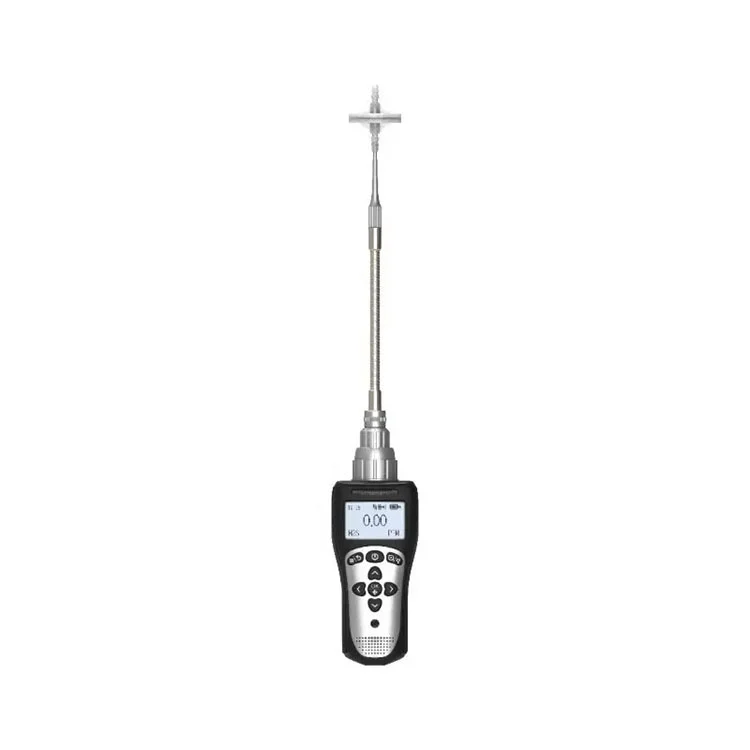
Portable platforms cover the rounds between: machinery room inspections, valve and flange checks, and entry into ammonia-adjacent spaces, configured from the same sensor platform family as the other toxic gases in these guides.
Working around ammonia plant
Ammonia rises when warm and spreads at breathing height from cold releases, so point placement follows the release physics rather than a single rule. Machinery rooms combine fixed detection with ventilation interlocks; personal monitors cover the rounds; and the alarm philosophy treats the low alarm as an investigate-now instruction, because ammonia leaks escalate by corrosion and pressure, not by patience.
Cross-links: the toxic gas guide covers ammonia's family context, and the chemical plant application page sets out the fixed-scheme pattern it belongs to.
Ammonia's split personality in a release
Ammonia gas is lighter than air, yet a refrigeration release often behaves heavy: the flashing liquid chills the cloud, which slumps and travels at ground level until it warms and lifts. Detector placement must serve both behaviours — points high for the warmed gas and at breathing height for the cold cloud's path — and alarm doctrine must respect the cloud's travel: the first alarm may sound at a point the cloud has already passed. Plant-room schemes drawn with the cold-cloud picture in mind place points at the likely sources (valve groups, vessels, compressors) rather than at the room's geometric centre, buying the seconds that staged evacuation spends.
Electrochemical ammonia sensing and its care
Ammonia cells are electrochemical specialists working in a corrosive neighbourhood: the gas attacks materials, humidity swings stress the electrolyte, and continuous background exposure — common in refrigeration plants, where a faint ammonia presence is normal — consumes cell life faster than clean-air duty. Fleets in ammonia service should budget cells as consumables with a known cadence, keep the calibration gas logistics simple, and treat rising baseline drift as the cell's retirement announcement. In fertilizer and chemical service, where concentrations run higher and continuous, sampling and dilution systems carry the measurement where bare sensors would perish.
Ammonia beyond refrigeration
The same molecule serves as a process gas in fertilizer production, a reagent in flue-gas denitrification, a nutrient in fermentation and increasingly a prospective energy carrier. Each duty writes its own detection chapter: SCR systems monitor slip to protect air quality and catalyst economics; production areas guard against the toxic and flammable faces together (ammonia burns in a narrow band that high concentrations can reach); storage and transfer follow the refrigeration playbook at larger scale. The instruments converge — ppm toxics discipline with percent-level awareness — even as the industries diverge.
Ammonia specification checklist
Ammonia specifications state the duty's concentration country first: personal and area protection in the ppm tens and hundreds, leak hunting in the same band with faster response valued over precision, process and emissions work reaching upward where sampling systems take over. Then the environment's insults: humidity range and condensation habit, temperature extremes in cold stores and engine rooms, the companion gases of the site (refrigeration plants add oil mist and cleaning chemicals; fertilizer plants add dust and the rest of the nitrogen family). Cell life budgeting belongs on the page — ammonia service consumes cells on a schedule the buyer should know before the fleet is priced — together with the calibration plan, because ammonia calibration gas has its own logistics and shelf behaviour. Close with actuation: what the room system does at each stage, fan, isolation, alarm, and who proved it at commissioning. The checklist converts a corrosive, split-personality gas into a set of answerable questions, which is all specification ever is.
Ammonia terms
Anhydrous ammonia — the liquefied gas of refrigeration and fertilizer service, water-free and eager to find moisture in eyes and lungs. Flash gas — the portion of released liquid that vaporises instantly, chilling the remainder into a ground-hugging cloud. Cold cloud behaviour — the slumping travel of a refrigerated release before it warms and lifts, which placement must anticipate. Valve gland — the stem seal whose slow weep is the refrigeration plant's characteristic leak. Pump-out — the planned evacuation of ammonia from a section before it is opened, verified by measurement. Refrigerant charge — the inventory of ammonia in a system, the number that sizes its worst case.
SCR slip — the unreacted ammonia leaving a denitrification system, a process and emissions measurement in one. Electrochemical cell consumption — the accelerated ageing ammonia service imposes, budgeted as a consumable cadence. Water curtain and absorption — the emergency use of water's appetite for ammonia, which plant design places where releases would travel. Exposure limits — the tens of ppm that frame area alarming, with the immediately-dangerous line at a few hundred. Stringency of odour — ammonia's blessing: detectable by smell well below danger, the opposite of H2S's treachery, yet never a substitute for instruments. Fertilizer complex — the production setting where ammonia is feedstock, product and hazard in rotation.
The refrigeration plant's decade view
Ammonia detection in refrigeration is a decades-long relationship between a plant and its sensors, and the plants that manage it well think in those terms: cell replacement budgeted like compressor oil, the alarm history reviewed like the energy bill, the scheme re-walked whenever the plant room gains a vessel or loses a wall. The gas rewards the long view because its incidents are rarely exotic — the gland that wept for a year, the point that was bypassed for a weekend and stayed that way, the cell whose drift was visible in March and fatal in October. All three stories are data stories before they are accident stories, which is the most hopeful sentence in this guide: the information existed, and the discipline of reading it is learnable, schedulable and cheap.
Ammonia's second career as an energy carrier
Ammonia is being recruited as hydrogen's travelling form — shipped, stored and cracked or burned at scales the refrigeration industry never contemplated — and its detection practice is travelling with it into ports, power projects and engine rooms that have no ammonia folk memory. The recruits should import the refrigeration industry's hard-won grammar whole: the cold-cloud behaviour, the staged room protection, the cell-consumption budgeting, the respect for glands and flanges as the characteristic leak. Industries rarely get to inherit a safety culture ready-made; ammonia's new employers have that luck available, and the measure of their seriousness will be whether they take the inheritance or insist on authoring their own incidents.
| Instrument | NH3 measurement | Role |
|---|---|---|
| MIC300-F08 | NH3 in NDIR six-gas set | Process and emissions analysis |
| MS800A-10 | NH3 in ambient gas panel | Fence-line monitoring |
| Portable platforms | Configured toxic channels | Machinery-room rounds |
Send a target gas list, get a configuration
Quotations are built from the published parameters on this site. Tell us the gases, the ranges and the quantity — or the point schedule for a fixed project — and the reply comes back within 24 hours.
Request a quotation