Ask a room of safety professionals whether their detectors are 'calibrated' and most will say yes; ask when each instrument was last bump tested and the room goes quiet. The two checks are routinely confused, occasionally swapped, and the confusion matters because they catch different failures. This article separates them cleanly: what each one does, what each one cannot do, and the routine that combines them into something an auditor — or an incident investigation — would accept.
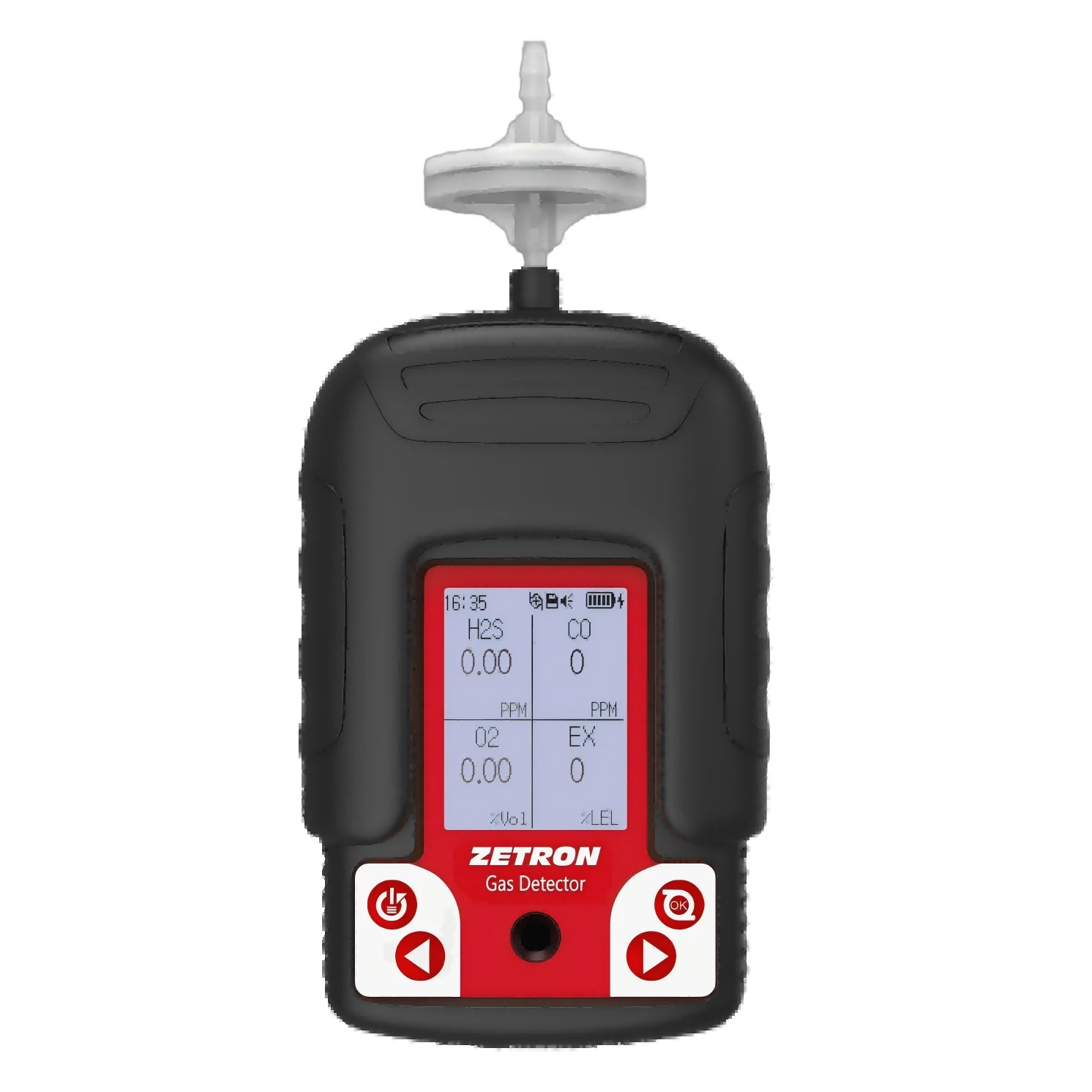
The bump test: a yes/no question
A bump test (or function check) exposes the sensors briefly to a known concentration of the target gas and confirms three things: the sensors respond, the response arrives within an acceptable time, and the alarms — audible, visual, vibrating — actually fire. It takes under a minute and answers a single question: if this instrument met gas today, would it warn its wearer?
What it cannot answer is whether the reading is accurate. A sensor can respond at half its true sensitivity and still pass a casual bump: it beeped, eventually, at roughly the right idea of the concentration. Bump testing catches dead sensors, blocked inlets, failed pumps and muted alarms — the silent failures — and that is exactly why it belongs in the daily, per-use rhythm.
Calibration: a how-much question
Calibration adjusts the instrument against reference gas: zero in clean air, then span at a certified concentration, so the displayed number means what it claims across the range. It corrects the drift that all field sensors accumulate — electrochemical cells ageing, catalytic beads losing activity, optics wandering — and it is the only routine that restores accuracy, as opposed to merely confirming responsiveness.
Manufacturers build the ritual to be short — one-button calibration on the MS400 family, automatic zero calibration on the MS104K-S1 personal monitor, multi-point calibration with temperature compensation on fixed points like the MIC100 — because they know the human truth of maintenance: procedures that take twenty minutes get deferred, and deferred calibration is invisible until it is evidence.
The routine that combines them
A defensible fleet rhythm runs like this. Bump test before each day's use (or each shift in high-risk work), and any instrument that fails leaves service immediately, no exceptions negotiated at the toolbox. Full calibration on the maker's interval, and immediately after any failed bump, any sensor replacement, any known over-range exposure or any reading the crew does not believe.
Around the instruments sits the unglamorous infrastructure: calibration gas within its shelf life, concentrations matched to the instrument spans, regulators and tubing chosen for the gas (reactive gases like H2S and chlorine are eaten by the wrong materials), and records that tie every event to an instrument serial number. Bump test kits exist as packaged accessories in the portable range precisely because programmes run better when the kit is a product rather than a shopping list.
Why the distinction is worth an article
Incident reviews return to this point with depressing regularity: a detector that was 'calibrated last quarter' but had a blocked inlet all week; a sensor poisoned by silicone vapour that responded to nothing yet wore a current sticker. Calibration is a state; the bump test is a heartbeat check. Programmes that understand the difference stop arguing about intervals and start catching failures on the morning they happen — which is the only morning that matters.
What a bump test actually proves
A bump test exposes each sensor to gas it must respond to, at a concentration that must trigger alarms, for long enough to prove the whole chain works: sensor, electronics, display, audible alarm, vibrating alarm, beacon. It answers a binary question — would this instrument protect its wearer today? The gas is typically the same multi-gas mixture used for calibration, applied for tens of seconds rather than the minutes a calibration takes. Records of bump tests — pass, fail, date, instrument — are the fleet's daily health ledger, and regulators and auditors ask for them by name.
The test's honesty depends on details crews rush: the gas must actually reach the sensors (a calibration cap properly seated, not waved nearby), the exposure must last until alarms fire rather than until the reading stirs, and a failed sensor must take the instrument out of service on the spot. A bump test that cannot fail is not a test; it is a ritual, and rituals do not appear in incident reports as defences.
What calibration adds
Calibration adjusts. Span calibration sets the instrument's response against a known concentration so that the number on the screen is the number in the air; zero calibration sets the baseline in clean air. Sensors drift between calibrations — electrochemical cells consume themselves, catalytic beads lose activity to poisons and age, infrared benches foul — and calibration is the act that pulls the response back to truth. The size of the adjustment is itself diagnostic: small corrections are routine, large ones announce a sensor approaching its end, and a calibration log that trends adjustments over time is the cheapest predictive-maintenance tool in the building.
Frequency follows the manufacturer's guidance, the site's risk assessment and the evidence of the fleet's own drift history. Fleets that calibrate on evidence — extending intervals for sensors that hold span, shortening them for sensors that wander — spend less and know more than fleets obeying a single arbitrary date for every instrument.
Failure stories both routines exist to prevent
The classic bump-test catch is the sensor that breathes but cannot shout: response present, alarm disabled by a setting nobody remembers changing, or a buzzer killed by a drop. The classic calibration catch is the quiet liar: an instrument that alarms faithfully at gas it detects, but under-reads by half, so a space at twice the action level presents as marginal. Neither failure announces itself in normal use, because normal air is zero and zero always looks fine. Gas exposure — brief for the bump, measured for the span — is the only mirror that shows them.
There is also the shared failure both routines prevent together: the poisoned catalytic bead. Sulfur compounds, silicones, lead and halogenated vapours can strip a bead's activity in a single shift. A morning bump test catches the corpse before the entry; the post-incident calibration record proves the fleet's routine was sound. Sites with known catalyst poisons should treat bump testing as non-negotiable and consider infrared combustible sensing, which does not share the poisoning mechanism.
Building the routine a crew will actually keep
Routines survive when they are fast, near the work and unambiguous. A docking station or a simple gas-and-regulator kit at the point of issue, a bump that completes inside a minute, a traffic-light pass/fail the wearer cannot misread, and a log that writes itself — that is the anatomy of a routine with a future. Routines that require a walk to another building, a form in triplicate and a supervisor's signature decay within a quarter, whatever the procedure manual says.
Ownership completes the design: one named role accountable for gas stock, regulator condition, due dates and the quarantine of failed units. Instruments fail bump tests in every healthy fleet; the fleet's quality is measured by what happens next — a tag, a bench, a spare issued — not by the pretence that failures do not occur.
Cost accounting for the sceptical
The arithmetic is lopsided. A bump test consumes pennies of gas and a minute of time; a calibration, a few minutes and a fraction of a cylinder across many instruments. Against that stands the cost of one entry made on a dead instrument — measured first in human terms, then in investigation, downtime, liability and reputation. Even in purely commercial language, the test regime is the cheapest insurance the operation buys, and the only one whose payout is a non-event: the shift where nothing happened because the instrument was alive.
The chemistry inside the canister
Bump and calibration gas is a manufactured truth with a shelf life, and its chemistry deserves a paragraph in every training. Reactive components — hydrogen sulfide, chlorine, sulfur dioxide — decay inside cylinders, faster in small ones, which is why their expiry dates are shorter and why an out-of-date mixture can fail a healthy sensor or, worse, pass a dying one at a concentration that is no longer what the label claims. Demand-flow regulators deliver gas at the rate the instrument's pump or diffusion expects; the fixed-flow regulator from a different kit can starve or flood the test. Storage matters too: cylinders cooked in a vehicle or frozen in a yard deliver their label's promise approximately. The fleet's truth is only as good as the canister's biography, and the biography is written by logistics nobody finds glamorous.
Docking stations: automation and its discontents
Docking stations industrialise the routine: the instrument is seated, the station bumps or calibrates per its schedule, records everything, flags failures, and charges the battery while it works. The gains are consistency and evidence — the log writes itself, identically, every day. The discontents are subtle: automation can hide a degrading sensor inside a passing workflow if the station's own gas and flow are not themselves maintained; a fleet can drift into trusting the dock's green light the way drivers trust a dashboard. The professional pattern uses the dock and audits the dock — periodic manual verification with an independent gas source, the station's cylinders on the same expiry discipline as the hand kits. Automation should multiply attention, not replace it, and the fleets that understand that get the dock's full value.
Failure taxonomy: what the two routines catch
Catalogue the failures by their catcher. The bump test catches: dead and dying sensors, blocked inlets and filters, disabled alarms and buzzers, flat batteries masquerading as readiness, pumps that no longer pull. Calibration catches: span drift in every direction, zero wander from contaminated baselines, cross-sensitivity grown with age, the slow poisoning that shaves a catalytic bead's response month by month. Neither catches: the wrong gas set for the hazard, the miscalibrated cylinder, the procedure nobody follows — those belong to specification, logistics and supervision respectively. A fleet's testing regime is complete only when all three layers are owned, and most post-incident reviews find the failure in the layer nobody owned, not in the sensor.
Teaching the routines so they survive the trainer
Training decays unless it is built into the artefacts: the bump station that will not issue an untested instrument, the tag that makes a failed unit visibly failed, the supervisor's board that shows today's compliance without asking. Teach the why once, thoroughly — the poisoned bead, the silent buzzer, the lying zero — and then engineer the environment so the right action is the easy action. What survives a trainer's departure is never the lecture; it is the dock layout, the default settings, the form that takes thirty seconds. Buyers evaluating instruments should therefore evaluate ecosystems — docks, tags, software, defaults — with the same seriousness as sensor specifications, because ecosystems are what their crews will actually live inside.
The regulator's-eye view
Inspectors and auditors do not ask whether a fleet owns calibration gas; they ask for the trail — bump records before use, calibration records at interval, actions on failures — and they sample it against reality by picking an instrument and demanding its biography. Fleets that generate the trail as a by-product of the routine (docking logs, desk software, a bench book kept like a ship's log) answer in minutes. Fleets that reconstruct the trail before audits answer in apologies, and the reconstruction is usually visible. The design principle follows: choose the routine whose evidence writes itself, because in the rooms where these questions are asked, the evidence is the routine — the rest is testimony.
Gas-free work and the tester as an instrument
One more role deserves the routines' protection: the person who certifies spaces for others. The gas tester's own instrument is the foundation of every certificate they sign, and its bump and calibration state is part of the certificate's honesty whether or not the form asks. Yards and plants that certify hot work should hold their testers' instruments to the fleet's strictest standard — tested before the round, calibrated on the shortest interval, the first candidates for replacement at any doubt — because a certificate is a promise made to people who will trust it with torches in their hands. The tester's dock discipline is, in the end, a form of care for strangers.
A closing audit you can run this week
Five questions audit any fleet's testing health without leaving the office. Can I see yesterday's bump results for every instrument that worked yesterday? Can I name the instruments that failed anything this month and what happened to them next? Is every cylinder in the building in date, and do I know its lot? Do the calibration adjustments trend anywhere I have not looked in a quarter? If an inspector took the third instrument from the left, could I produce its biography in ten minutes? Any 'no' is a finding with a cheap remedy this week. The routines this article has anatomised exist to make those five answers boring, and boring, in this corner of safety, is the sound of a system working.
The two routines in contract language
Where testing is contracted — facilities services, fleet management, hire arrangements — the routines belong in the contract as measurable duties: bump before issue with records queryable by the client, calibration at stated intervals with adjustment data retained, failure quarantine with defined turnaround, gas stock managed to expiry with lot traceability. Contracts that say 'instruments maintained to manufacturer standards' buy an argument; contracts that enumerate the trail buy a service. Clients should audit by sampling the trail against physical instruments, unannounced, because a trail that survives sampling is the only kind worth paying for — a sentence that applies equally to in-house fleets and their internal customers.
What the routines cannot do
Honesty about limits completes the doctrine. Bump tests and calibrations cannot rescue the wrong instrument for the hazard, the right instrument in the wrong place, or a workforce trained to silence alarms. They guarantee a narrower and vital thing: that the instrument in the hand is alive and truthful today. Programmes fail when that guarantee is asked to carry the whole safety case, and succeed when it is set in its place — the foundation course of a structure whose other courses are specification, placement, training and supervision. The two routines are the foundation; this article has spent its length on them because foundations are where structures are actually decided, unglamorous and load-bearing at once.
A one-page testing standard
Compress this article to the page a fleet can pin at its dock. Every instrument is bumped before its shift's work, with gas that reaches the sensors and time for the alarms to fire; a failure tags the unit out and issues a spare. Every instrument is calibrated at its class interval, adjustments recorded per sensor, retirements ordered from the trend. Gas is in date, lotted, and stored like the truth it is. Records are generated by the routine, sampled weekly by a supervisor, and producible by instrument within ten minutes. Four sentences; a fleet that lives by them will pass its audits, and — the point beneath the point — will deserve to.
The routines and the regulator's return visit
Regulators return, and the return visit reads the interval between visits: did the findings close, did the trail thicken or thin, do the same instruments fail in the same ways. Fleets that treat the interval as the product — the routines running unobserved, the records accumulating their quiet consistency — find return visits shorter than first ones. There is no technique for this beyond the one this article has described from every side: a routine designed to be kept, evidence that writes itself, and failures treated as the system's information rather than its embarrassment. The return visit is merely the audit of whether the fleet meant it.
Envoi: the sound of a bump test
There is a sound at the start of a safe shift: the small hiss of gas, the instrument's answering chirps, the alarm's brief shout in the dock's quiet. Crews who hear it daily stop hearing it, which is the point — safety's mature form is unremarkable. This article has spent its length arguing that the unremarkable is manufactured, by routines and records and canisters in date, and that the manufacture is cheap compared with every alternative. Keep the sound in the building.
The routines, taught in one toolbox talk
The whole doctrine fits a toolbox talk, and should be given as one, annually, by the supervisor rather than by a visitor. It runs: the instrument can die in four ways — sensor, alarm, airway, battery — and only gas finds three of them. The bump is the morning's question, the calibration is the season's answer, and the cylinder in the corner is the truth both of them consult, so its date matters. A failed unit is tagged, swapped and forgotten by the wearer, remembered by the system. And the paper is not the enemy of the work; the paper is how the work defends itself. Ten minutes, no slides, questions taken standing up. Fleets whose supervisors can give that talk own their routines; fleets that import the talk annually from outside are renting them.
The routines in the fleet's obituary and biography
Every fleet eventually gets written up — at its replacement, in a tender's lessons-learned, in the safety case for its successor. The write-up that matters is not the purchase history but the testing biography: the years of bump compliance, the sensors retired on evidence, the failures and their remedies, the drills of a system that stayed honest. Fleets that kept the trail can write that biography in an afternoon and defend every line of it; fleets that did not must reconstruct it from memory, which is to say from fiction. The successor fleet's specification inherits the biography's lessons — the dock that was worth its price, the gas logistics that failed every August — and so the routines' records outlive the instruments they describe, which is the longest reach any maintenance practice in this industry achieves.
A vocabulary for the dock wall
Pin the vocabulary where the work happens, because shared words are shared standards. Bump: the brief challenge that asks 'are you alive'. Span: the adjustment that asks 'are you truthful'. Zero: the baseline that asks 'are you honest about nothing'. Drift: the slow emigration of a sensor's answer from the truth. Poisoning: a death by neighbourhood. Quarantine: the tag that turns a failure into a fact. Biography: the record that lets an instrument testify about itself. Seven words on a dock wall will steer more behaviour than a procedure binder on a shelf, because the wall is consulted at the moment of action and the binder is consulted, mostly, by auditors.
Colophon: on keeping small promises
A bump test is a small promise — ninety seconds, a hiss of gas, a shout from the alarm — kept at the start of a shift by people who will never meet the strangers their honesty protects. Calibration is the same promise at a longer wavelength. Industries run, in the end, on the accumulation of small promises kept unobserved, and the gas detector's dock is simply one of the places where the accumulation is visible. Keep the promises; the statistics will keep themselves.
Postscript: the tenth instrument
Audit habit worth stealing, to end on a practical note: once a quarter, draw the tenth instrument from the dock — not the first, not the newest — and live its biography for ten minutes. Its bump trail, its span adjustments, its sensor's age against its duty, its alarms across the quarter. If the tenth instrument's story is coherent, the fleet's is; systems reveal themselves in their median members, not in their showpieces. The routine that keeps the tenth instrument honest is the routine this article has been describing all along, and it is happening, or not, at a dock near you tomorrow morning.