This guide groups the family on one page deliberately: NO appears in portable instrument tables, NO2 in ambient panels, and most real programmes — tunnels, underground mines, boiler plants, diesel fleets — must think about both at once.
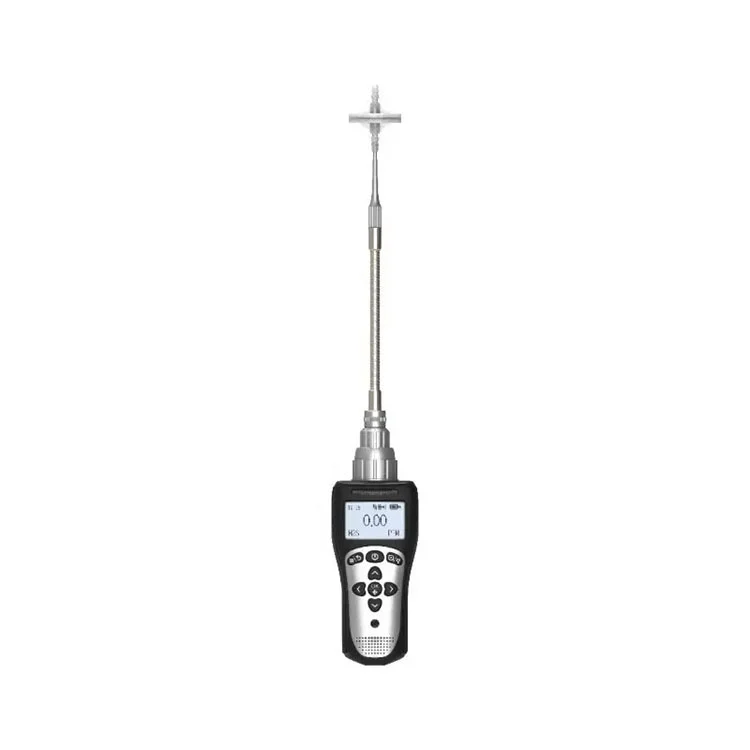
Portable NO measurement
The MS400 platform table reads nitric oxide at 0–10 ppm with 0.001 ppm resolution and T90 within 30 seconds, putting NO inside the standard multi-gas sweep for combustion-adjacent workplaces: engine test cells, boiler houses, underground diesel operations and tunnel construction, where NO is the early marker of the NOx burden.
Electrochemical cells serve these spans; their cross-sensitivity to NO2 is the known behaviour that configuration and interpretation must respect when both gases are present.
Ambient NO2 and the family picture
The MS800A-10 ambient station carries nitrogen dioxide in its pollutant panel — the community and fence-line face of the family, where NO2 is the regulated marker for combustion sources from traffic to plant stacks.
Emissions-side, NOx measurement belongs with flue gas and CEMS conversations; the boiler and emission guides on this site take it from there. The family's lesson is that NO and NO2 are one story told at two speeds: measure the workplace gas, monitor the ambient product, and connect them through the source.
NO and NO2: a pair, not a gas
Combustion makes nitric oxide first; the air converts it toward nitrogen dioxide; the ratio at any point depends on the source's temperature history and the plume's age. Instruments that report only one species therefore describe half the chemistry, and health limits — set mainly on NO2, the more injurious — cannot be judged from an NO reading alone without an assumed ratio. Combined instruments and converters (which oxidise or reduce one species into the other's sensor) exist to close that gap, and specifications for combustion and traffic environments should state plainly which species, or which sum, each number represents.
Diesel, tunnels and the underground NO2 problem
The sharpest peacetime NO2 exposures are underground: diesel fleets in mines and tunnels load the ventilation with NOx, and the control loop is measurement-driven — sensors at the faces and along the headings trimming fan duty to the actual load, holding NO2 under its ceiling while saving the enormous energy of worst-case ventilation. The same loop serves road tunnels and underground parking, where jet fans answer to CO and NO2 together. Sensor placement follows the airstream: readings must represent the air the workers and drivers breathe, at the speed the ventilation changes.
NOx in emissions and process control
At the stack, NOx is a permit number and a control variable: burner tuning, SCR ammonia injection and SNCR dosing all steer by it, and over-steering wastes reagent while under-steering breaches consent. Continuous analysers — chemiluminescence at the reference tier, electrochemical and NDIR at the working tier — close those loops. The specification conversation for stack NOx is really about the sampling system: hot wet gas, dust, acid dew point. The analyser chosen is the one whose sample path the plant can keep alive.
NOx specification checklist
A nitrogen-oxides specification must first declare its species: NO alone for combustion diagnostics, NO2 alone for exposure protection, or the pair — separately reported or summed as NOx — for emissions. The declaration decides the instrument (single cells, dual cells, converter architectures, chemiluminescence at the reference tier) and prevents the quietest error in this field, comparing one species' reading against another species' limit. Then the standard questions in their NOx dress: the sampling system's temperature and materials, because NO2 is reactive and water-soluble and dies in cold wet lines; the range set by the duty (tunnel air at ppm, stack gas at hundreds of ppm, engine test cells higher); cross-interference from the combustion crowd; and calibration with the species actually claimed. Underground and tunnel duties add the control-loop questions — sensor placement in the airstream, response matched to fan control, redundancy where the loop guards people — because there the instrument is not reporting on the ventilation; it is the ventilation's senses.
Nitrogen oxide terms
Thermal NOx — the nitric oxide born of nitrogen and oxygen at flame temperatures, rising steeply with heat. Fuel NOx — the share converted from nitrogen bound in the fuel itself. NO2 conversion — the atmospheric oxidation of NO toward NO2, which makes the pair's ratio a function of plume age. Chemiluminescence — the light-emitting reaction by which reference NOx analysers count molecules. Converter — the stage that transforms NO2 into NO (or the reverse) so a single sensor can report the sum. SCR and SNCR — the ammonia and urea injection systems that destroy NOx after formation, steered by its measurement.
Diesel NOx — the underground and tunnel burden from mobile plant, the ventilation control loop's antagonist. Ventilation on demand — the fan control philosophy that meters air to measured gas load, with NO2 among its governors. Exposure ceiling for NO2 — the low-ppm line that underground schemes defend. Stack NOx — the permit quantity, averaged and audited like other emissions. Low-NOx burner — the staged-combustion design that trades flame shape against formation, narrowing the tuning window analysers then police. Sample line losses — NO2's death by dissolution in wet, cold sampling paths, the stack measurement's quiet bias.
NOx and the energy ledger
Underground and tunnel ventilation is among the largest energy lines in its industries, and NOx measurement is the ledger that makes its optimisation honest: fans run to the measured load rather than to the worst imagined one. The savings are large enough to fund the monitoring estate many times over, which creates a happy rhetorical position for the safety case — the instruments that guard the workforce also pay the power bill's reduction. Energy teams and ventilation officers should therefore specify together, because the control loop they share is one system: sensors honest enough for safety, responsive enough for control, and maintained to a standard both masters can audit.
NOx in the hospital and the laboratory
Beyond combustion's kingdom, NOx appears in quieter rooms: nitric acid in laboratories and pickling lines, welding arcs in fabrication shops, the anaesthetic and chemical stores of hospitals. The concentrations are smaller and the exposures longer, and the instruments shrink accordingly — personal and area electrochemical points, alarmed against the low ceilings that chronic exposure science sets. The principle of the guide holds at this scale too: name the species, for the laboratory's hazard is NO2's, born of acid meeting air and metal, and a monitor that counts only NO will file a reassuring report about the wrong molecule.
Tunnel air and the city's lungs
The road tunnel is where most citizens will ever be monitored-for rather than monitoring: CO and NO2 sentinels along the bore, visibility meters beside them, jet fans answering the trio in a choreography the drivers never notice. The system's design questions are this guide's writ large — placement in the airstream, response matched to fan control, redundancy where the loop guards people — executed for an audience that cannot be trained, briefed or evacuated by instruction. It must simply work, in silence, for decades. Civil engineering's gas detection is the discipline's public works, and its unobtrusiveness is the measure of its success.
NOx's paperwork: the tunnel's other log
Underground operators keep two logs that should be one: the ventilation diary and the gas archive. Read together they explain each other — the fan's duty against the fleet's underground hours, the NO2 peaks against the blasting and mucking cycle — and the combined reading is what an inspector, an energy auditor or an incident investigator will eventually reconstruct by hand if the operator has not. Integration costs a shared clock and a weekly habit; its product is a single story about the air the workforce breathed, told by the instruments that guarded it and the fans that served it, in numbers that agree because they were born agreeing.
| Instrument | Measurement | Role |
|---|---|---|
| MS400 platform | NO 0–10 ppm, 0.001 ppm resolution | Workplace multi-gas sweeps |
| MS800A-10 | NO2 in ambient panel | Fence-line and community |
| Flue / CEMS lines | NOx in emissions duty | Stack and boiler programmes |
Send a target gas list, get a configuration
Quotations are built from the published parameters on this site. Tell us the gases, the ranges and the quantity — or the point schedule for a fixed project — and the reply comes back within 24 hours.
Request a quotation